
Based on a bold hypothesis, a group of researchers is exploring whether spiny sea urchins could save coral reefs. That scientific experiment is taking place right now, right here at Atlantis.
Why Sea Urchins?
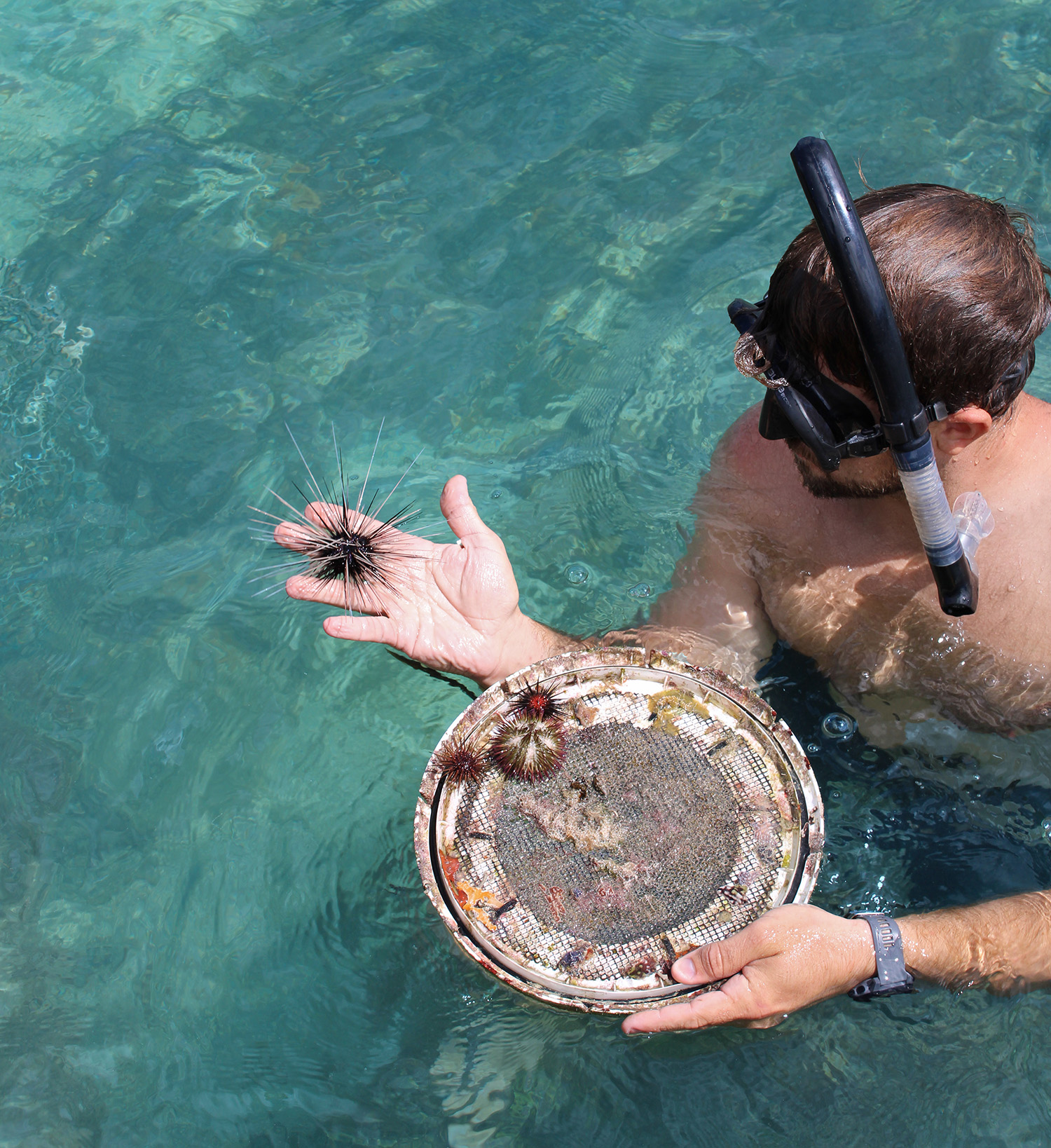
Coral reefs face serious challenges, including the proliferation of algae, which grows rapidly and can smother healthy coral and prevent coral larvae from settling on ocean floors. But algae are important food sources for fish and other marine animals. So how can we prevent algae from getting out of hand? That’s what the team at SOAR (Sustainable Ocean and Reefs) wants to find out. And they think one solution might be to enlist the help of algae-eating spiny sea urchins (Diadema antillarum).
 An Idea Takes Shape
It sounds easy in principle: place sea urchins on coral reefs and the problem disappears, right? But until they reach maturity, sea urchins can be eaten by other predators. The trick is keeping the sea urchins safe until they become big enough to take care of themselves. That’s how the spiny sea urchin nursery at Atlantis was born.
What’s Happening Now
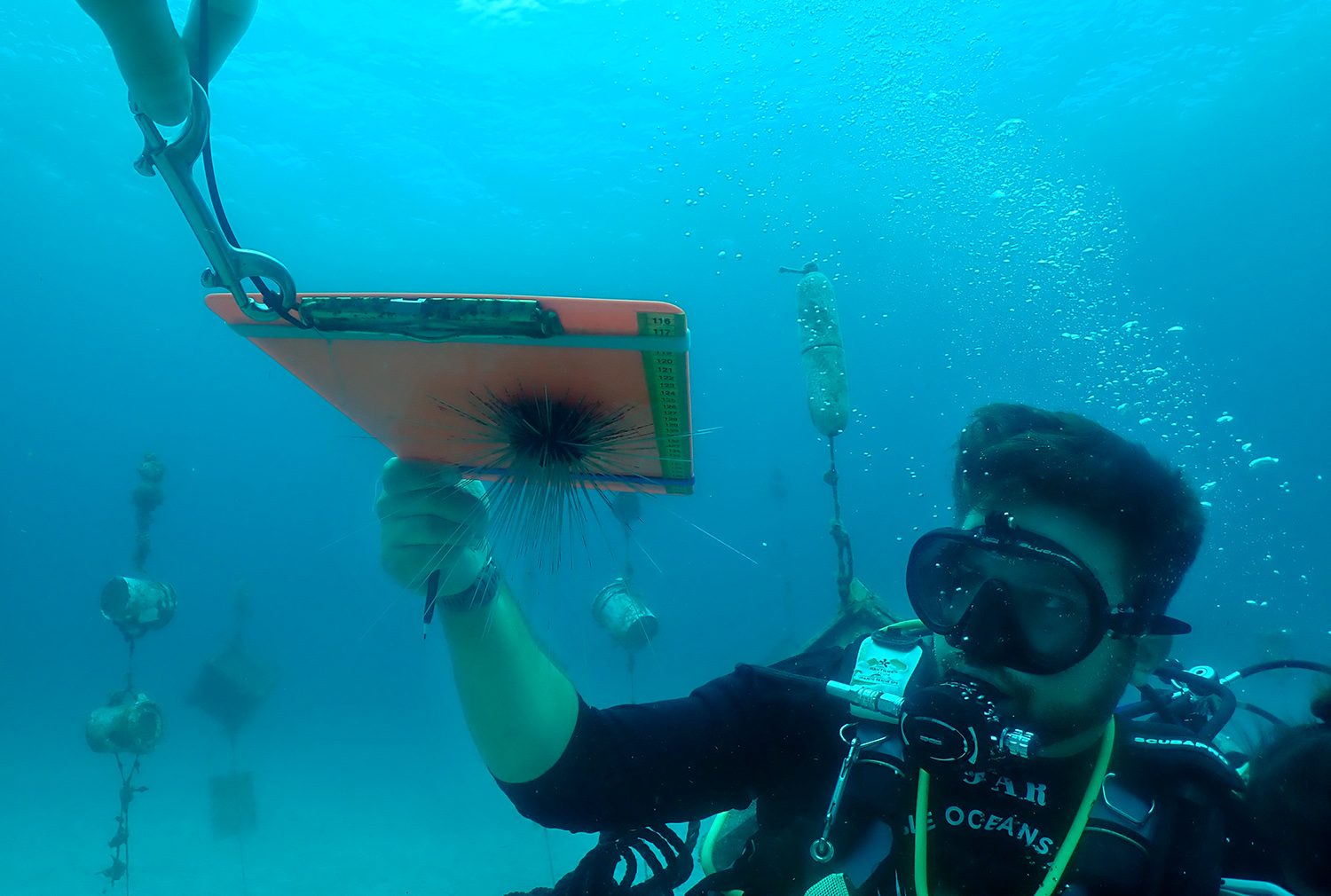
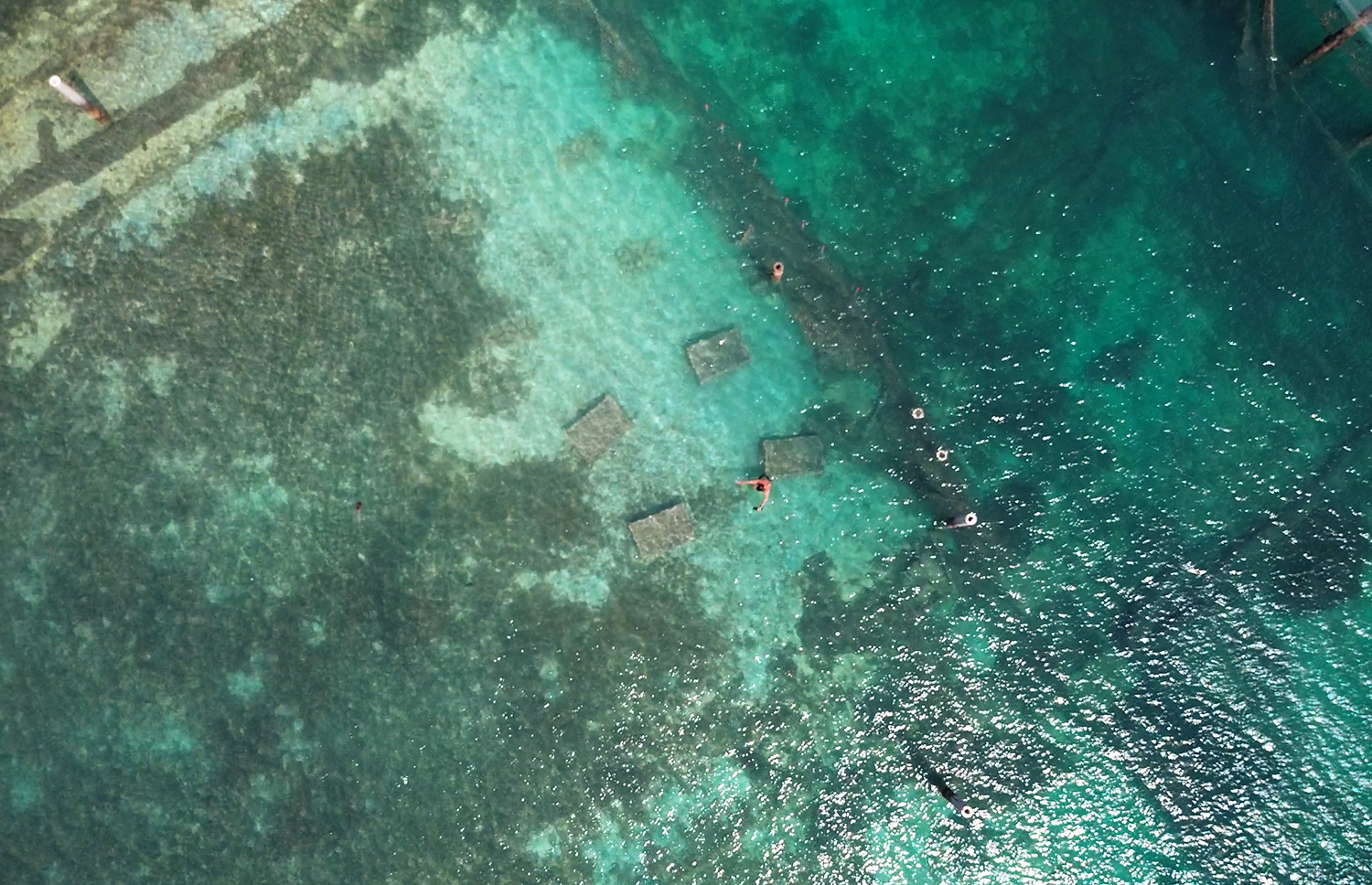
Juvenile urchins – some no bigger than the tip of a pencil – are now being collected and moved to the nursery just off shore. Unlike an artificial lab setting, the nursery at Atlantis mimics the complexity of a real coral reef where the urchins can learn to find shelter and avoid predators by hiding in nooks and crannies.
Next Steps
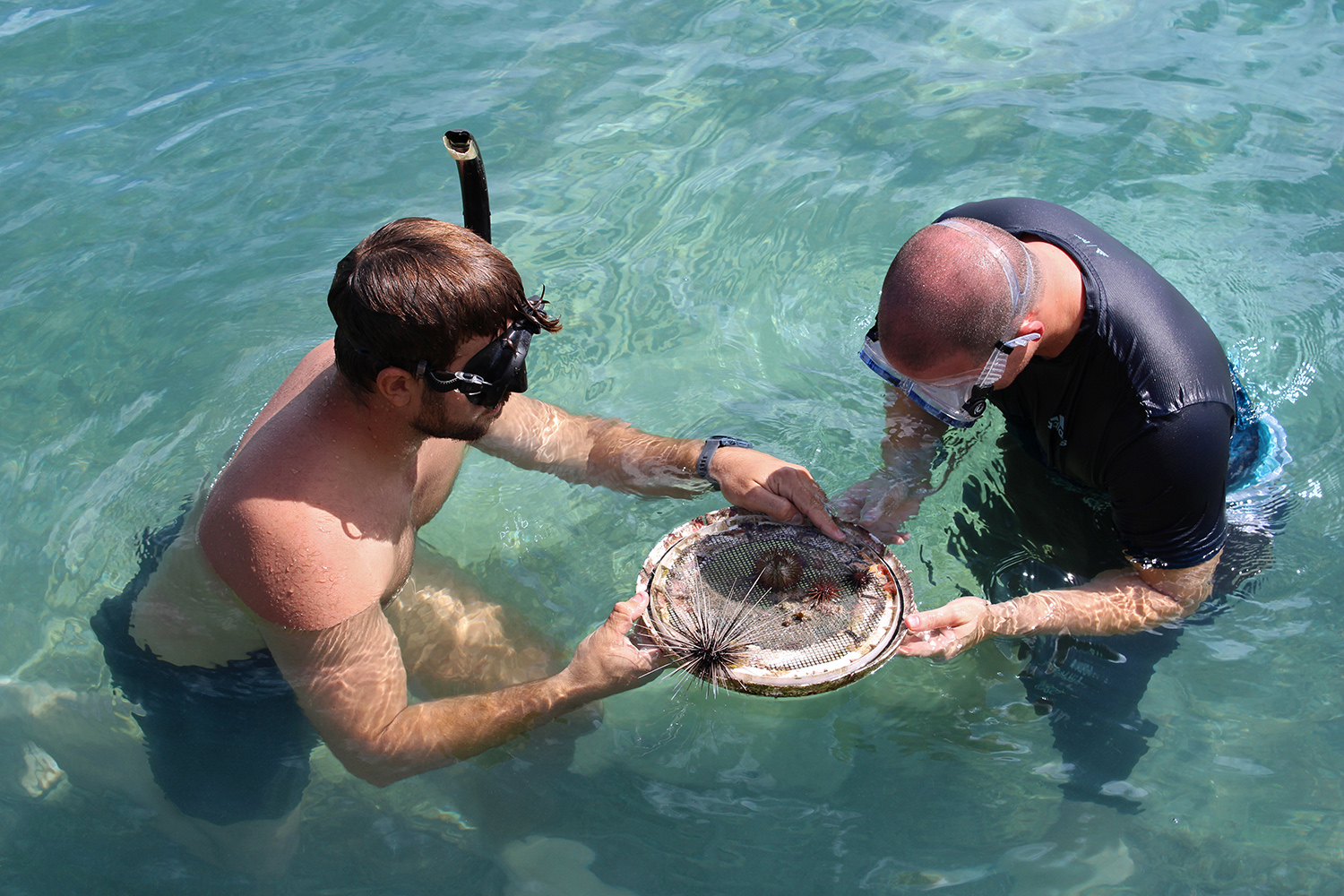
When the urchins are large enough to discourage most fish from eating them, they’ll be taken deeper into the ocean and released on actual coral reefs, where they’ll have a much higher chance of survival. Then, we watch, wait and see how the experiment unfolds. Should it be successful, it could pave the way to coral restoration around the world.
The Atlantis Connection
The Atlantis Blue Project Foundation (ABPF) funds early-stage, high-potential scientific research and conservation programs like the spiny sea urchin nursery – the first of its kind in The Bahamas. ABPF was created to save sea species and their extraordinary habitats throughout The Bahamas and surrounding Caribbean seas.
Join the Project
Visit the Atlantis Blue Project Foundation, to learn more about the sea urchin study and how you can support this and other promising ocean conservation projects.
Atlantis Rescue Center Sea Urchin Nursery
▶ Watch the Video: Conservation in Action
The Sustainable Ocean and Reefs (SOAR) project includes 3 different sites in The Bahamas and the first sea urchin nursery in the country, located at our Atlantis Rescue Center on Paradise Island. These nurseries are used to cultivate, grow out, study, and eventually deploy sea urchins onto the reef.
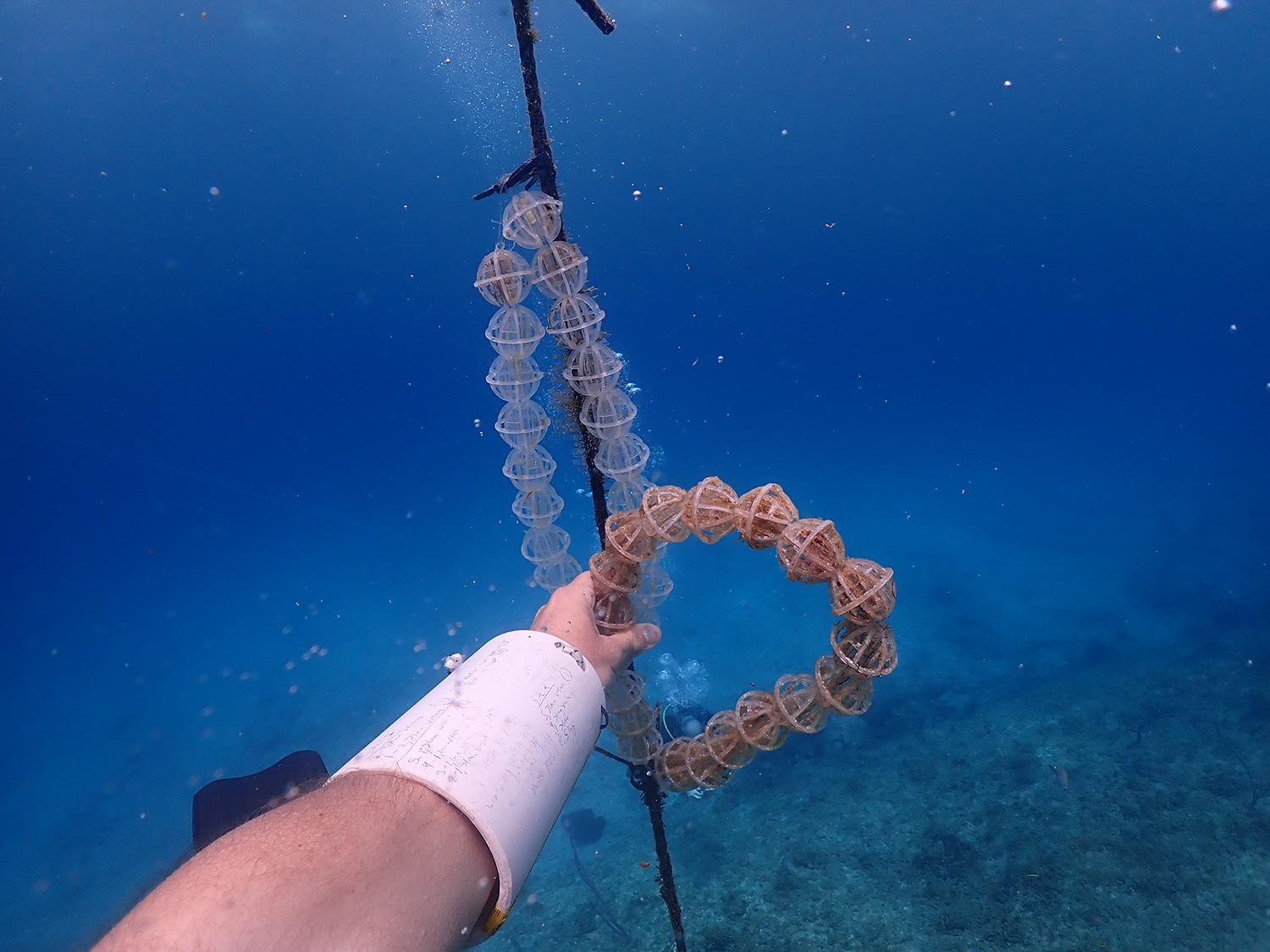
These project sites are made up of a variety of structures, including bioballs which act as recruitment devices for settling larvae. As the urchins grow, they are transferred into buckets and protective cages, where they can safely mature away from predators until they are large enough to be released onto the reef.
Sea urchins are grazers, which means they eat algae. Their ecological role is to control the overgrowth of algae, creating conditions that allow corals to survive and rebuild.
Yes! They move using tiny tube feet, hydraulically powered extensions that use water pressure to help them walk and grasp food.
Urchins reproduce through broadcast spawning. This is when males and females release huge amounts of sperm and eggs into the water for external fertilization. The fertilized eggs develop into microscopic larvae which drift in ocean currents until they find somewhere to settle.
Nope! A few species have venomous spines that can hurt if you step on or handle them, but they’re not deadly.
Long-spined sea urchins (Diadema antillarum) are venomous, not poisonous.
For example, lionfish are venomous, but pufferfish are poisonous.
Sea urchins have a beak-like mouth structure on their underside called Aristotle’s lantern. This structure contains five teeth which they use to scrape food off surfaces.
The nonprofit Atlantis Blue Project Foundation funds the Sustainable Ocean and Reefs (SOAR) project, the first sea urchin nursery in The Bahamas.
You make a difference! Every Marine Adventure and Dolphin Cay program supports the Atlantis Blue Project Foundation, a non-profit working to protect coral reefs and sea life through projects like this one.
Stay four nights or more and save up to 35%, plus complimentary breakfast for two and more time to experience everything Atlantis has to offer.
Stay four nights or more and save up to 35%, plus complimentary breakfast for two and more time to experience everything Atlantis has to offer.