
There’s something unforgettable about watching a manta ray glide through the water. At Atlantis Paradise Island, you’ll experience that rush when you spot Kronos, a young manta who has already done quite a bit of growing since he arrived.
Kronos came to Atlantis measuring just under seven feet across. Today, he’s more than eight feet wide. And while that may sound big, he still has plenty of room to grow.
Kronos is an Atlantic manta ray (Mobula yarae). This is a newly described species that lives in the Atlantic Ocean from the northeast coast of the U.S., the Gulf of Mexico, the Caribbean and south to Brazil. Atlantic mantas are slightly smaller than giant manta rays and can reach a maximum disc width of 20 feet.
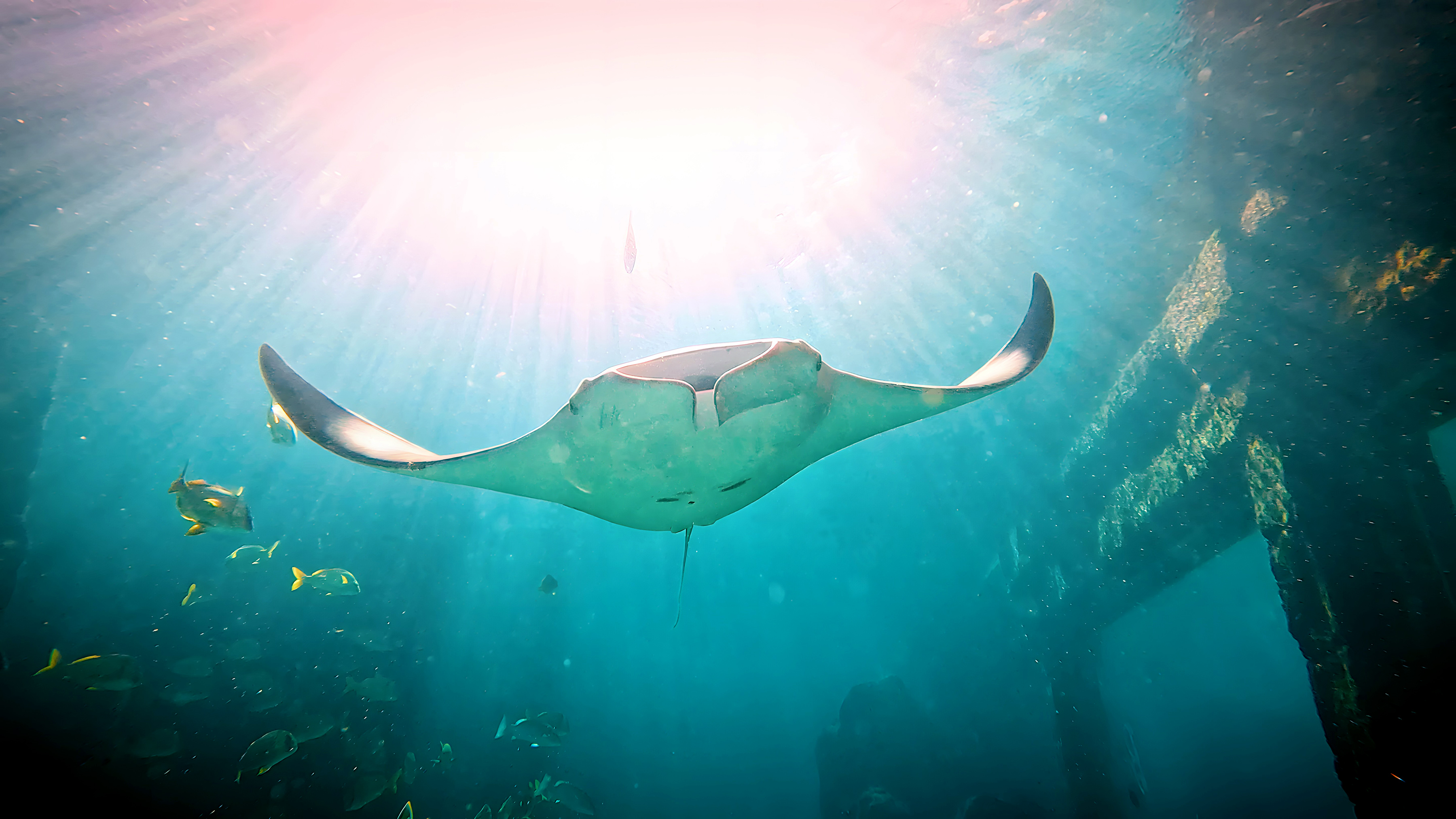
What’s for Dinner? Small Bites.
For such a big animal, the Atlantic manta eats surprisingly small food.
Mantas are filter feeders, which means they swim through the water with their mouths open, filtering out plankton, tiny shrimp and other small animals to eat. Special flaps on either side of their mouths called cephalic lobes help funnel all that food-filled water inside. At Atlantis, Kronos’ menu includes two types of krill, mysid shrimp and finely chopped minnows.
Kronos enjoys gliding along the surface and will sometimes perform barrel rolls after feeding. Barrel rolling, essentially doing underwater somersaults, is one of the ways mantas can gather more food while feeding. 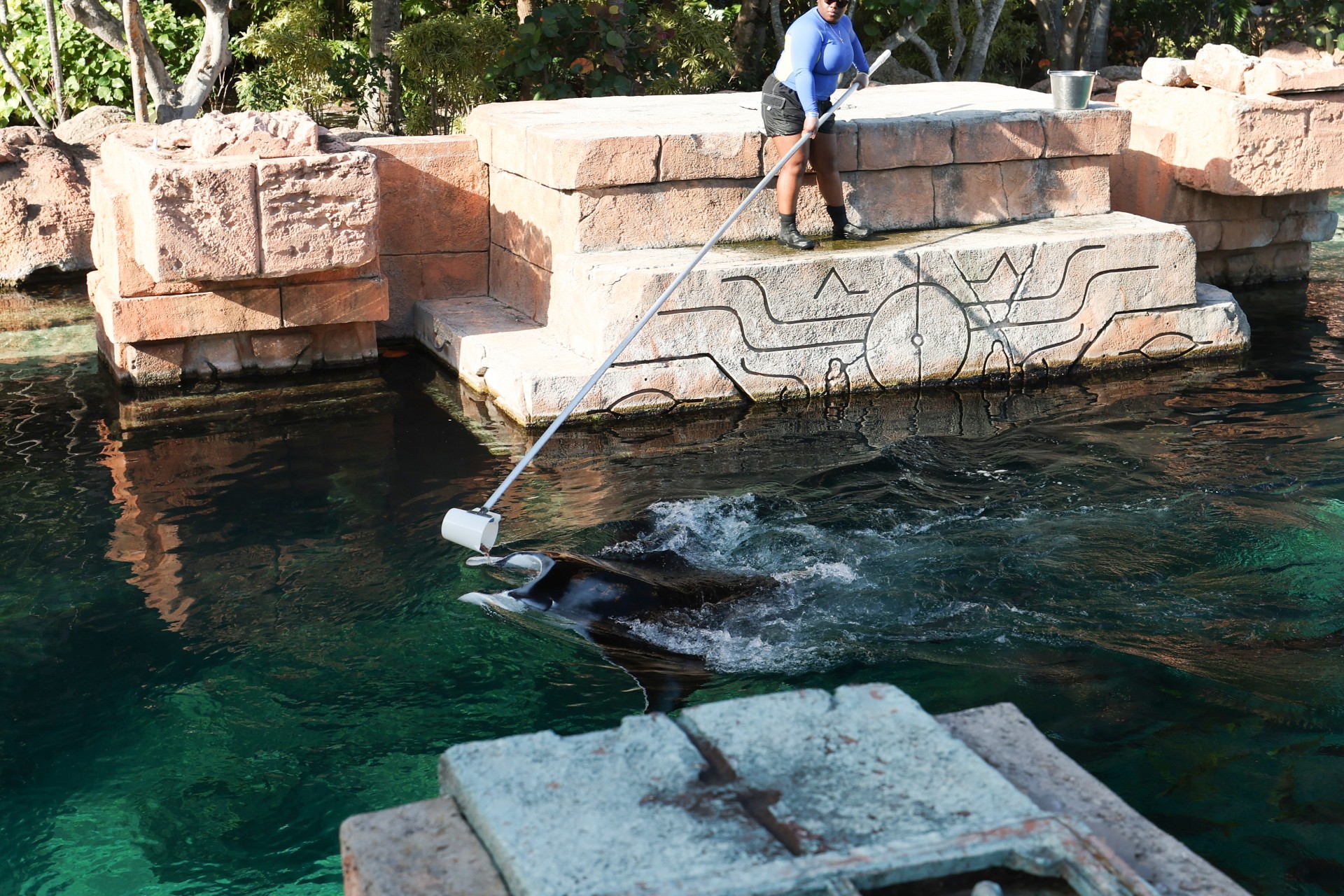
Kronos and His Entourage
If you spot Kronos, you might also see some of his entourage.
Daisy, Atlantis’ resident eagle ray, can often be seen gliding alongside him, while a school of blue runner jacks likes to swim just beneath him. It makes for quite a sight and gives guests another glimpse into the diverse community of marine life at Atlantis.
Kronos is the 15th manta ray Atlantis Paradise Island has cared for, giving the animal care team years of experience observing these remarkable animals.
Big Ray, Big Challenges
There’s still a lot we don't know about Atlantic manta rays. Researchers believe that, like other large mantas, the Atlantic manta ray may live at least 40 years. They reproduce very slowly, typically having just one pup every two to three years. That means populations can have a difficult time recovering when their numbers decline.
One of their biggest threats is fishing. Mantas may be intentionally or accidentally caught while fishermen are targeting other species. They can also become tangled in fishing gear and marine debris or be injured by boats.
Here's one more fascinating fact: every manta has its own pattern of spots on its belly. Like a fingerprint, that pattern can help researchers identify individual animals and learn more about where they travel. NOAA even encourages people who spot mantas in the wild to submit photos to help with its research.
So, the next time you see Kronos cruising through the water at Atlantis, spend a few minutes watching him. You might catch him gliding along the surface, swimming with Daisy or even treating you to one of those barrel rolls.
And remember: at just over eight feet across, our gentle giant still has some growing to do.
Stay four nights or more and save up to 35%, plus complimentary breakfast for two and more time to experience everything Atlantis has to offer.
Stay four nights or more and save up to 35%, plus complimentary breakfast for two and more time to experience everything Atlantis has to offer.